

Being sidelined by a persistent injury or nagging pain is frustrating, especially when you have athletic goals to chase. Whether you are working through an ACL injury, dealing with recurring ankle sprains, or managing low back pain, knowing what to expect from your first physical therapy appointment can make all the difference. At Core Sport PT in Downers Grove, IL, your first visit is designed to be thorough, collaborative, and focused entirely on you.
This post walks you through what happens at your initial evaluation, introduces the most common injuries treated at Core Sport PT, and explains how a personalized plan of care sets the foundation for a successful return to sport or return to activity.
Most Common Injuries We See at Core Sport PT
Before diving into what your first appointment looks like, it helps to understand the types of injuries and conditions the team at Core Sport PT regularly works with. These are among the most frequently seen:
- ACL injuries — A tear or sprain of the anterior cruciate ligament, common in cutting and pivoting sports like soccer, basketball, and football. Symptoms often include a popping sensation, significant swelling, and instability in the knee.
- Ankle sprains — One of the most common sports injuries across all activity levels. Lateral ankle sprains involve the ligaments on the outside of the ankle and can range from mild to severe. Symptoms include swelling, bruising, and difficulty bearing weight.
- Shoulder instability — Often seen in overhead athletes such as baseball and volleyball players, shoulder instability occurs when the structures around the shoulder joint fail to keep the ball properly in the socket. Symptoms may include a feeling of looseness, pain with overhead movement, or repeated dislocations.
- Low back pain (spondylolysis) — Spondylolysis is a stress fracture in one of the vertebrae, frequently seen in young athletes who perform repetitive extension movements. Symptoms typically include localized lower back pain that worsens with activity.
- Hamstring strains — A pull or tear of the hamstring muscle group, common in sprinting sports. Symptoms include sudden pain in the back of the thigh, tenderness, and difficulty with full knee extension or hip flexion.
Each of these conditions responds well to evidence-based physical therapy when addressed with a structured, progressive approach.
What Happens at Your First Appointment
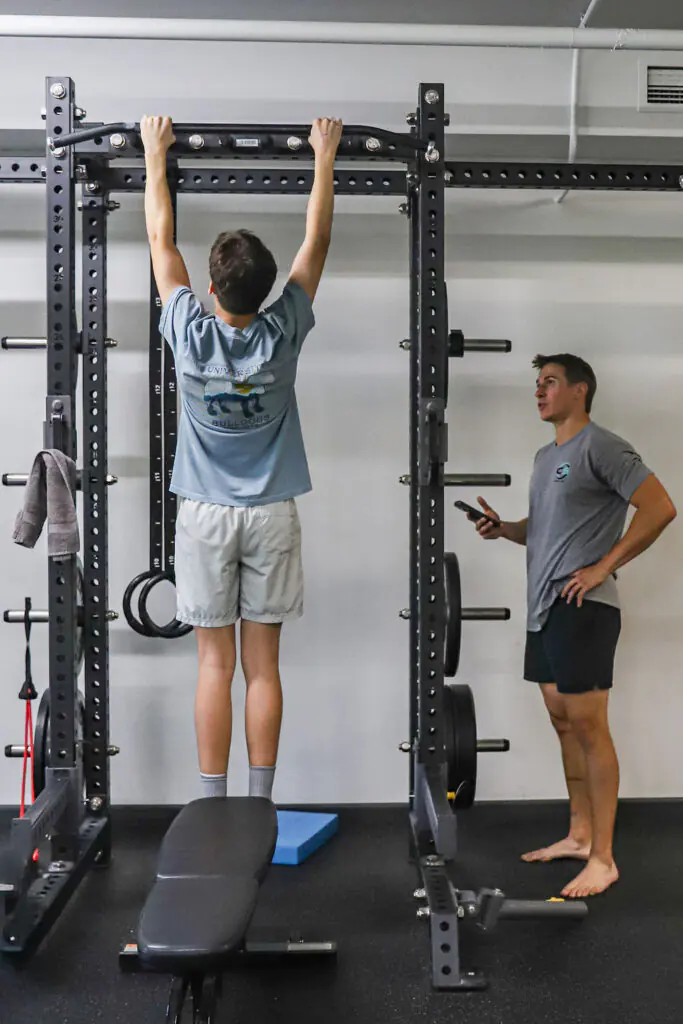
Your first visit to Core Sport PT is not a rushed intake form and a few generic exercises. It is a focused, one-on-one evaluation designed to give your physical therapist a complete picture of where you are and where you need to go.
The Initial Conversation
Your appointment begins with a conversation. Your physical therapist will ask about your injury history, current symptoms, training schedule, sport or activity demands, and your goals. Whether you are a high school athlete preparing for a return to the field or an active adult working toward getting back to recreational sports, this dialogue shapes everything that follows.
Come prepared to discuss:
- How and when your symptoms started
- What movements or activities make them better or worse
- Any previous injuries or surgeries
- Your current activity level and sport-specific demands
- What a successful outcome looks like for you
The Physical Evaluation
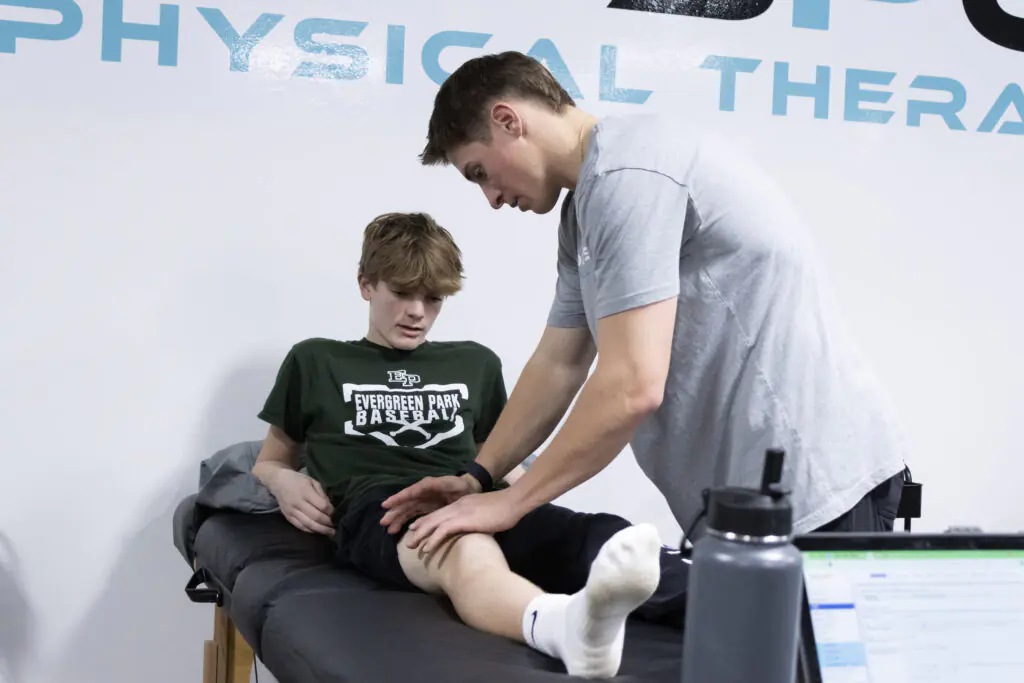
Following the intake conversation, your therapist will conduct a hands-on physical assessment. This typically includes:
- Mobility and range of motion testing to identify restrictions
- Strength testing to detect imbalances or deficits
- Stability and movement screening to assess how your body controls load and position
- Gait and biomechanics analysis when relevant to your condition or sport
- Functional movement testing to understand how your injury affects real-world performance
For athletes focused on return to sport, Core Sport PT also utilizes Return to Sport Testing with VALD technology. VALD systems provide objective, measurable data on strength, power, and movement patterns, giving both you and your therapist a clear baseline and a reliable way to track progress over time.
Building Your Personalized Plan of Care
Once the evaluation is complete, your therapist will walk you through their findings and work with you to build a personalized plan of care. This plan is built around your specific injury, your activity goals, and the realistic timeline for progressive loading and return to activity.
Depending on your condition and needs, your plan may incorporate:
- Manual PT techniques such as joint mobilization and soft tissue work
- Dry needling to address muscle tension and promote tissue recovery
- Cupping for soft tissue mobility and circulation support
- Tendon Health Recovery sessions for conditions like Achilles tendinopathy or patellar tendinopathy
- Strength training and functional training progressions tailored to your sport
- Sport-specific programming as you advance through rehab
- Normatec equipment for recovery support
- Injury prevention strategies and education on load management
Your plan will evolve as you progress. The goal is not just to address your current symptoms but to build the strength, stability, and mobility needed to perform at your best and reduce the risk of re-injury.
A Realistic Framework for Rehab and Return to Activity
One of the most important things your first appointment will establish is a realistic framework for your recovery. Every injury and every athlete is different, and timelines vary based on the severity of the condition, your baseline fitness, and how consistently you engage with your plan.
A general rehab progression at Core Sport PT typically moves through these phases:
- Phase 1 — Pain and symptom management: Reducing inflammation, restoring basic range of motion, and beginning gentle mobility work.
- Phase 2 — Strength and stability building: Introducing progressive loading to rebuild the muscles and connective tissue around the injured area.
- Phase 3 — Functional and sport-specific training: Advancing to movements that mirror the demands of your sport or activity, including gait retraining, agility work, and sport-specific programming.
- Phase 4 — Return to sport or activity: Using objective measures, including Return to Sport Testing with VALD, to confirm readiness before full clearance.
Throughout every phase, patient-centered education is a core part of the process. Understanding your injury, why certain exercises are prescribed, and how to manage load outside of sessions puts you in control of your recovery.
Actionable Tips Before Your First Appointment
There are a few things you can do before arriving at Core Sport PT to make your first visit as productive as possible:
- Wear comfortable athletic clothing that allows your therapist to assess the affected area
- Bring any relevant imaging reports, surgical notes, or prior PT records
- Write down your top three to five questions or concerns ahead of time
- Be honest about your pain levels, activity limitations, and goals — there are no wrong answers
- Avoid pushing through significant pain in the days leading up to your appointment
Safety note: If you are experiencing severe pain, significant swelling, numbness, or loss of function, seek medical evaluation promptly. A physical therapist can help guide your care, but certain symptoms may require imaging or physician clearance before beginning a rehab program.
Why Core Sport PT in Downers Grove, IL
Core Sport PT serves athletes and active individuals across Downers Grove, IL, as well as the surrounding communities of Oak Lawn and Evergreen Park. The clinic’s approach combines orthopedic physical therapy, sports physical therapy, performance training, and strength and conditioning under one roof, making it a practical choice for athletes who want continuity from injury rehab through sports performance training.
The team works with athletes across a wide range of sports and activity levels, applying evidence-based methods and individualized programming to support both recovery and long-term athletic performance.
Ready to Get Started?
Your first appointment at Core Sport PT is the first step toward understanding your body, addressing what is holding you back, and building a clear path forward. Whether you are managing one of the most common injuries seen at the clinic or working toward a specific performance goal, the evaluation process is designed to give you answers and a plan.
Visit Core Sport PT to schedule your evaluation and take the first step toward a stronger, more resilient return to the activities you love.