
If you are a competitive athlete looking for physical therapy that actually understands your sport, your goals, and your drive to get back to full performance, your first visit to Core Sport PT in Evergreen Park is built with you in mind. This is not a passive rehab experience. From the moment your evaluation begins, the focus is on understanding your body, your movement, and your path back to the field, court, or track.
Here is a clear look at what to expect, what gets assessed, and how your plan of care takes shape from day one.
One-on-One Care Built Around Your Performance Goals
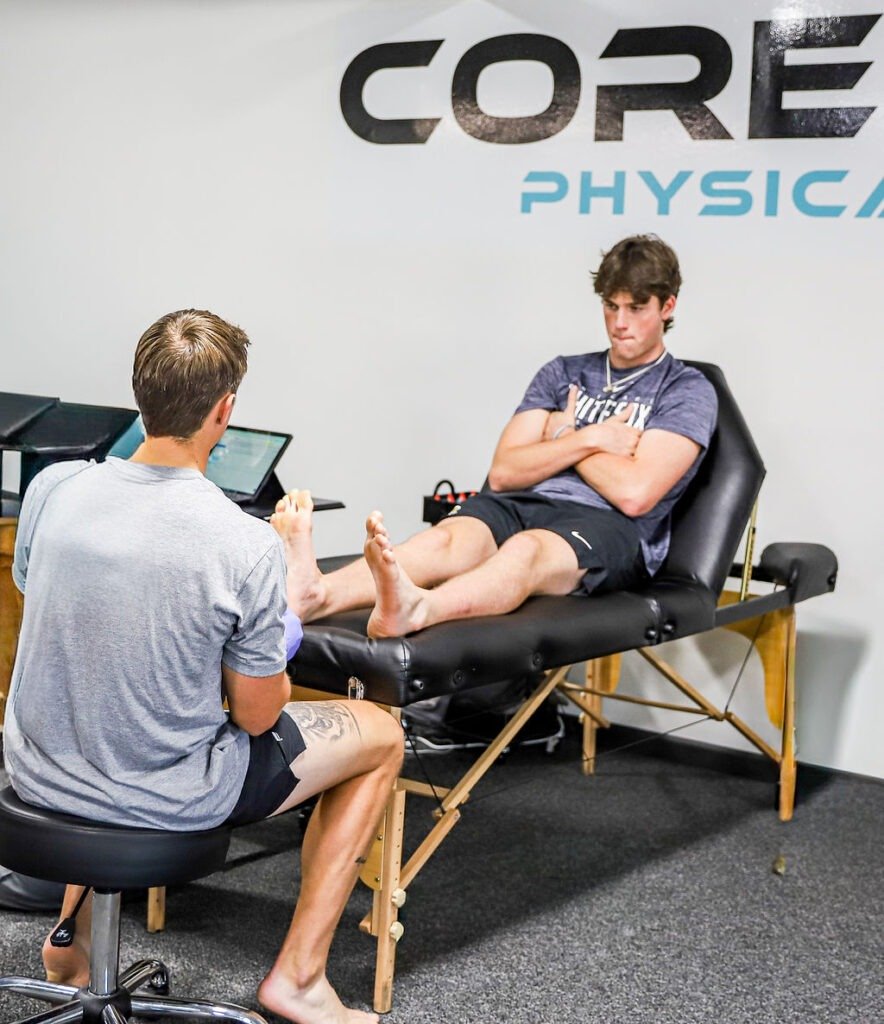
At Core Sport PT, your first appointment is entirely one-on-one with a dedicated physical therapist. There is no rotating between providers or sharing time with other patients. Your therapist focuses solely on you, your history, your movement, and your athletic goals.
This patient-centered approach allows for a thorough, unhurried assessment that captures the full picture of where you are and where you need to go. Whether you are recovering from an injury, preparing for a return to competition, or working to prevent future setbacks, your care is shaped around your specific demands as an athlete.
What a First Evaluation at Core Sport PT Looks Like
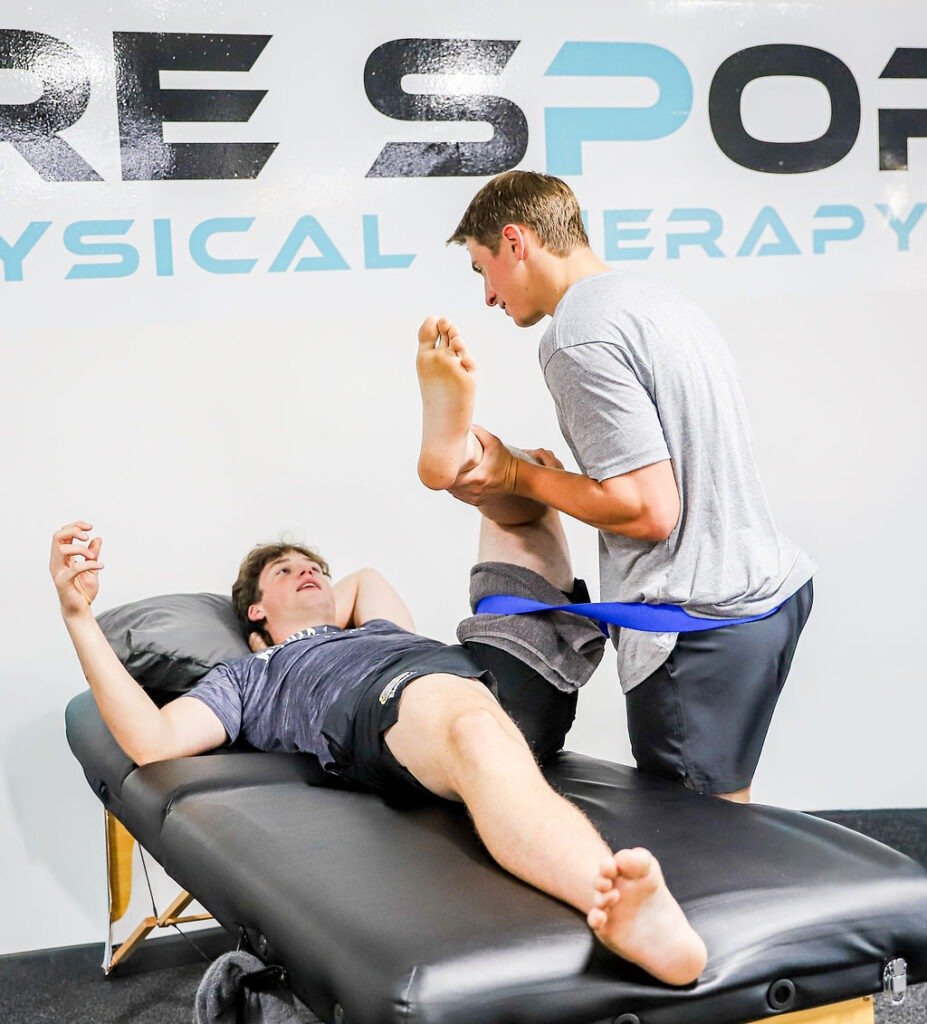
Your initial visit is a comprehensive evaluation that goes well beyond a basic check-in. Your physical therapist will walk through your injury history, current common symptoms, sport-specific demands, and performance goals before moving into hands-on assessment.
The physical portion of the evaluation typically includes:
- Range of motion and joint mobility testing across relevant areas
- Strength and stability screening to identify asymmetries or deficits
- Movement and biomechanics analysis tied to your sport
- Gait assessment when applicable, particularly for runners and field sport athletes
- Functional training movement screens to evaluate how your body performs under load
This level of detail matters. Many injuries, including ACL tears, ankle sprains, shoulder instability, low back pain (spondylolysis), and hamstring strains, have underlying movement or stability factors that a surface-level exam would miss. A thorough evaluation helps identify those contributing factors early.
Most Common Injuries We See at Core Sport
Understanding the injuries that bring athletes through our doors helps set realistic expectations for what rehab and return to activity can look like. Below are the conditions we see most frequently at Core Sport PT.
ACL Injuries
ACL injuries are among the most significant setbacks a competitive athlete can face. They are common in sports that involve cutting, pivoting, and sudden deceleration, including soccer, basketball, football, and volleyball. Common symptoms include a pop at the time of injury, rapid swelling, and significant instability in the knee.
A PT evaluation for ACL injury will assess knee stability, quad and hamstring strength, and overall lower extremity biomechanics. Rehab is progressive, beginning with restoring mobility and reducing swelling before advancing through strength, functional training, and sport-specific loading. Return to Sport Testing using VALD technology helps objectively measure readiness before an athlete returns to full competition.
Ankle Sprains
Ankle sprains are one of the most frequently underestimated injuries in sport. Athletes often try to push through them, which can lead to chronic instability and recurring sprains. Common symptoms include lateral ankle pain, swelling, bruising, and difficulty bearing weight.
A PT evaluation will assess ligament integrity, mobility, and single-leg stability. Rehab focuses on restoring range of motion, rebuilding strength around the ankle and lower leg, and retraining balance and proprioception. Progressive loading and sport-specific drills are introduced as the athlete advances through their plan of care.
Shoulder Instability
Shoulder instability is particularly common in overhead athletes, including baseball players, volleyball players, and swimmers. It can present as a feeling of looseness, apprehension with certain movements, or recurring subluxations. Common symptoms include a sense that the shoulder may give way, pain with overhead activity, and weakness.
Evaluation includes assessing rotator cuff strength, scapular stability, and joint mechanics. Rehab targets the muscles that support and control the shoulder joint, with sport-specific programming reintroduced as strength and stability improve. Manual PT techniques may be incorporated to address tissue restrictions and joint mobility.
Low Back Pain and Spondylolysis
Low back pain is common across nearly every sport, but spondylolysis specifically affects young athletes involved in extension-heavy activities like gymnastics, football linemen, and overhead throwers. Common symptoms include localized lower back pain that worsens with extension, rotation, or prolonged activity.
A PT evaluation will assess lumbar mobility, core stability, hip flexibility, and movement patterns that may be contributing to stress on the spine. Rehab emphasizes building a strong foundation of core control and progressive loading to support the lumbar spine through sport-specific demands. Education around load management and injury prevention is a key part of the plan of care.
Hamstring Strains
Hamstring strains are among the most common muscle strains in sport, particularly in sprinting-based athletes. They range from mild pulls to significant tears and carry a high recurrence rate when not fully rehabilitated. Common symptoms include a sharp pain in the back of the thigh during acceleration, tenderness to touch, and difficulty with full knee extension under load.
Evaluation focuses on assessing hamstring strength, particularly eccentric capacity, as well as gait mechanics and hip and pelvis stability. Rehab follows a progressive loading model that builds tissue tolerance before reintroducing high-speed running and sport-specific movements. Return to Sport Testing helps confirm that the athlete has regained sufficient strength and symmetry before returning to full training.
Building Your Personalized Plan of Care
Once your evaluation is complete, your physical therapist will walk you through a clear, evidence-based plan of care tailored to your injury, your sport, and your goals. This is not a generic protocol. It is a structured roadmap that accounts for where you are now and what it will take to get you back to full performance.
Your plan may incorporate a range of treatments and modalities depending on your needs, including:
- Manual PT to address joint mobility and soft tissue restrictions
- Dry needling to target muscle tension and support tissue recovery
- Cupping to improve circulation and soft tissue mobility
- Tendon Health Recovery sessions for athletes managing tendinopathy
- Normatec equipment for compression-based recovery between sessions
- Sports performance training and sport-specific programming as you progress through rehab
- Strength training and functional training integrated throughout your plan of care
A Realistic Framework for Return to Activity
One of the most important conversations at Core Sport PT is around return to sport timelines and expectations. Recovery is not linear, and every athlete responds differently. What your physical therapist will provide is an honest, evidence-based framework that prioritizes doing things right over doing them fast.
Progressive loading is central to this process. Tissues need to be gradually exposed to increasing demands before they are ready for the full stress of competition. Skipping steps in this process is one of the most common reasons athletes re-injure themselves.
For athletes approaching full return to sport, Return to Sport Testing using VALD technology provides objective data to support that decision. Rather than relying on time alone or how an athlete feels, testing measures actual strength, power output, and movement quality against established benchmarks.
Actionable Tips to Support Your Recovery
While your physical therapist will guide your formal rehab, there are steps you can take outside of sessions to support your progress:
- Prioritize sleep and nutrition to support tissue healing and recovery
- Stay consistent with your home exercise program between visits
- Communicate openly with your therapist about changes in symptoms or how your body is responding
- Avoid returning to full sport activity before your therapist has cleared you, even if you feel ready
- Use Normatec equipment during recovery sessions if recommended to support circulation and reduce soreness
Safety caveat: The tips above are general in nature and are not a substitute for individualized guidance from your physical therapist. Always follow the specific recommendations in your plan of care.
When to See a PT at Core Sport
Knowing when to see a PT is not always straightforward. Many athletes wait too long, hoping an injury will resolve on its own. Others are unsure whether their symptoms are serious enough to warrant a visit.
As a general guideline, consider scheduling an evaluation at Core Sport PT if you are experiencing:
- Pain that persists beyond a few days or worsens with activity
- Swelling, instability, or limited range of motion in a joint
- A recurring injury that keeps coming back
- A desire to improve performance, strength, or movement quality as part of your training
- A recent surgery requiring rehab and structured return to sport progression
Athletes in Evergreen Park, Oak Lawn, and the surrounding area can access physical therapy and sports performance training at Core Sport PT without needing a referral in many cases.
Take the First Step
Your first appointment at Core Sport PT is the starting point for a structured, athlete-centered approach to recovery, rehab, and performance. Whether you are managing one of the most common injuries we see at Core Sport or working toward a specific athletic goal, the process begins with a thorough evaluation and a clear, honest plan of care.
If you are ready to take that first step, schedule your evaluation at Core Sport PT and start building the foundation for a strong, durable return to sport.